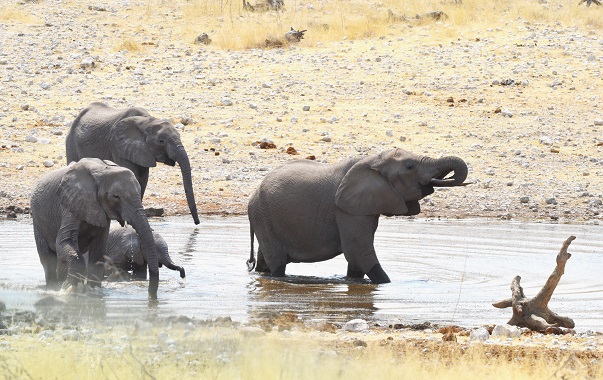
Etosha is one of southern Africa’s fantastic National Parks. It is located in northern Namibia, about a four-hour drive north of the capital city of Windhoek.
Okaukuejo
Upon arrival at the National Park, you will have to pay an entrance fee of $150 Namibian dollars per person, plus $100 for your vehicle. This amounts to about $23 US, $33 Canadian, or 20 Euros.. You don’t pay at the gate. You pay when you get to the town of Okaukuejo.
Okaukuejo is about a 25-minute drive from the gate. Here you will spend some time paying fees and arranging your accommodation., The accommodation is usually fully booked, so you will have to book months in advance, either yourself or through an agent.
See this link for a comparison of an organised vs a self-drive tour of Namibia. African-self-drive-adventure
At Okaukuejo, there are also restaurants and gift shops, but you will probably want to find your accommodations first and come back later.
The Facilities
The accommodations at Okaukuejo are poorly lit and in need of a paint job. The benches at the waterhole are falling apart. The road signs in the park needed repainting years ago. In short, the facilities in Etosha are in great need of maintenance and repair. The service at the restaurant is poor.
The fuel stations in the park are closed down. There is a fuel station outside the Okaukuejo gate. Fill up there; if you exit the park to fill up later, you will have to pay another entrance fee.
Why go to Etosha
So, if the facilities are so poor, why go there? For the wildlife, of course, especially the rhinoceros.
The Black Rhonoceros
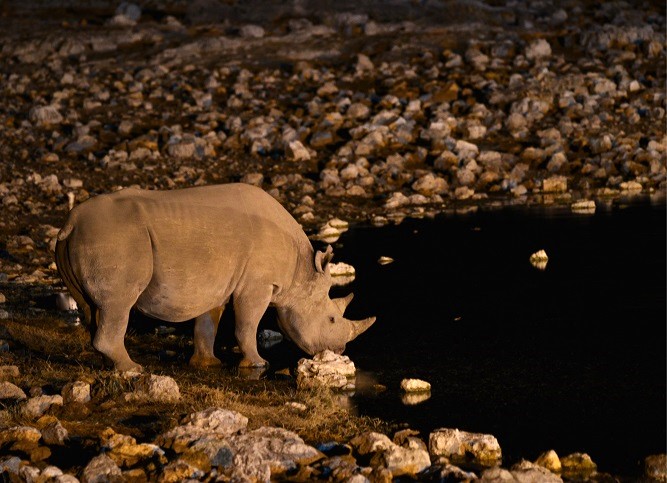
You might see a rhinoceros anywhere in Etosha or other places if you are lucky. However, the waterhole at Okaukuejo is the only place where you are almost guaranteed to see one fairly close. It is not a 100% guarantee, but at least one Rhino comes to the waterhole practically every evening between 7 and 9 pm. The only drawback to this is that it will be dark by then. However, the waterhole is floodlit, and you can probably still get a good look at them and some decent photos.
Then, if you are lucky and spot another Rhino somewhere, that will be a bonus. If not, at least you should see one at Okaukuejo. As it turned out, this was the only Rhinoceros that we saw on our tour, so we were very happy that we spent a night there.
Accommodations outside the park
There are nicer and cheaper accommodations nearby outside the park. However, if you do not have accommodation inside the park, you will have to leave by sunset. Although the facilities are poor and expensive, it is definitely worth staying in the park. We would not have seen a Rhino otherwise. Also, you will not be allowed back in until sunrise and you will have to pay another entrance fee.
Types of accommodations at Okaukuejo
There are three rows of accommodations at Okaukuejo. The first row, closest to the waterhole, looks very luxurious; however, we did not see the inside. They are costly. Although you can see the waterhole from these buildings, you will still want to walk up to the wall around the site for a better view and photos. Also, because this is the closest accommodation to the waterhole, there will be a constant flow of other people cutting through your property to get to the waterhole.
There is a second row of cabins, smaller and less luxurious.
We stayed in the third row, which is the smallest and cheapest. I did not expect luxury, but I think basic maintenance like painting is justified. We did not spend much time in the cabin, only sleeping.
There is also a camping area. Many people tour Namibia and Botswana in a truck with a tent on the roof. Camping in a tent on the ground is unsafe due to animals.
Unless you have money to spare, I think the cheaper accommodations are still the best. No matter which one you get, you will still want to walk to the waterhole, which is the reason for being there.
Other animals at Okaukuejo Waterhole
Other wildlife that you might see at the waterhole include giraffe, warthog, and birds. Occasionally, other animals, such as lions, appear, but not every day.
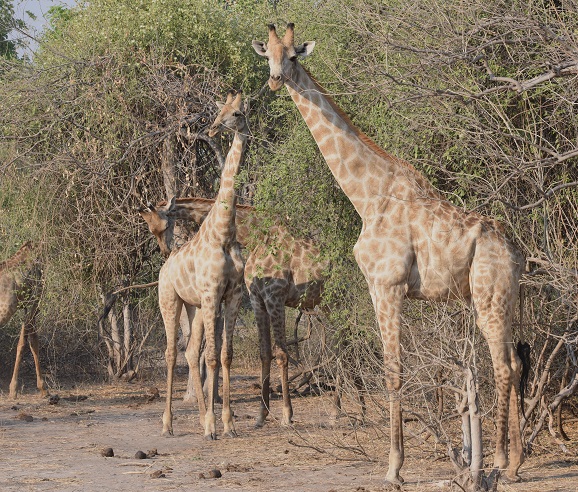
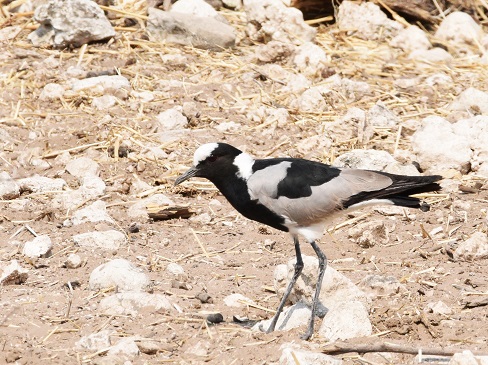
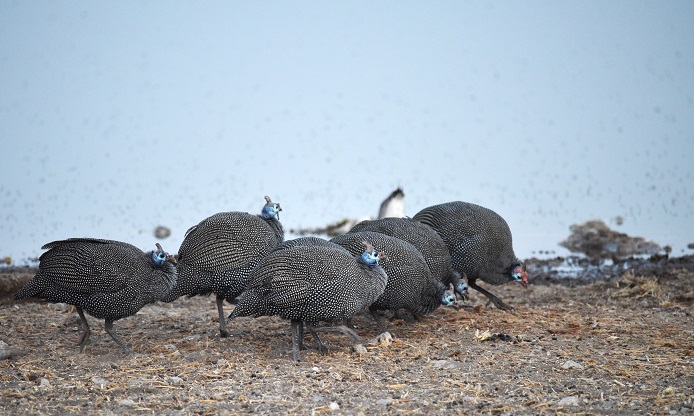
Two of the most common birds are the Blacksmith Plover and the Helmeted Guineafowl. The Guineafowl can fly, but they prefer to run. It is pretty amusing to watch them running from place to place.
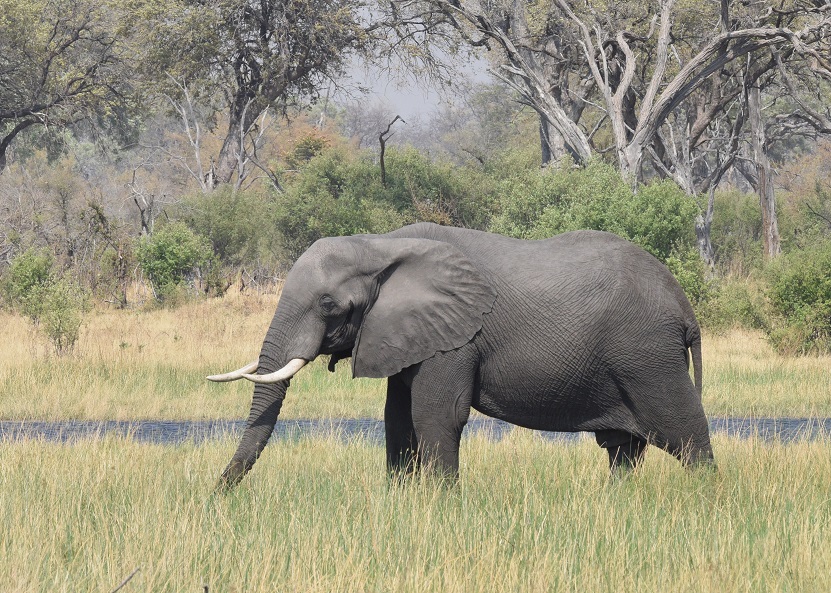
Elephants
The next morning, after breakfast, head out of Okaukuejo to look for more wildlife. Make sure you have a map of the park and head for the waterholes. Etosha is very dry, and water is life. You might see animals anywhere, but the waterholes are where most congregate.
Zebra
Zebras are probably the most common animal that you will see in Etosha
Where to next?
You have a decision to make. Should go out the same gate where you entered, or drive across Etosha and exit at the Namutoni gate on the east end of the park. We recommend driving across the park and exiting to the east for several reasons. This gives you a tour of the park without backtracking. You can visit more new waterholes instead of driving back to Okaukuejo. Another reason to exit the east end is to continue to the Caprivi Strip. The Caprivi is a tropical jungle and contains most of Namibia’s wildlife.
However, the park is vast, and the roads are unpaved, so it will take at least half a day to drive to the other end of the park from Okaukuejo, not including any stops. Therefore, we suggest you book a night at Halali so you can split the trip into two days. You will want to stop at as many waterholes as possible, and not simply drive to the exit before sundown.
Prohibited
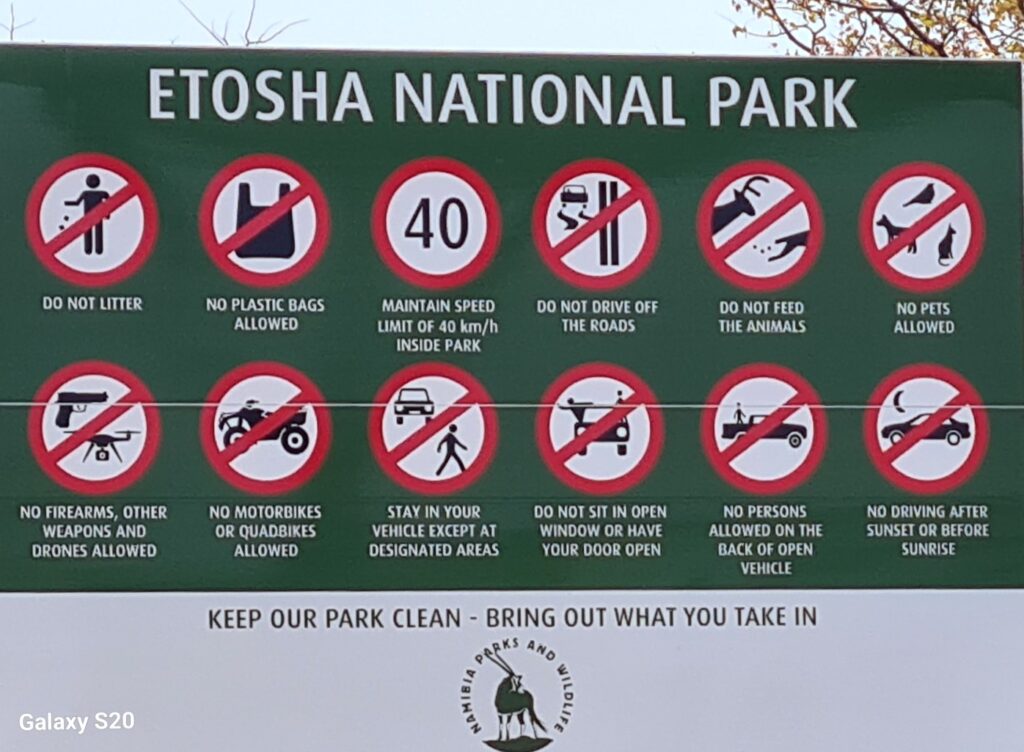
Etosha National Park has many rules. Some of them involve what is not allowed in the park. We will go over a few of the most important ones.
No drones. Drones are not allowed in the park. Many people have them these days, and a bunch of drones flying all over the park all day will cause the animals a lot of stress. Your drone will be confiscated at the gate, and you can get it back when you exit the park. The problem is that you will have to exit at the same gate you entered. So if you entered at Okaukiejo, you will have to go all the way back there to get your drone. Then, if you are going to Capri, you will have to drive all around the outside of the park. This could cost you two extra days of driving.
Plastic Bags: No plastic bags are allowed in the park, so dispose of any before going to Etosha.
Pets are not allowed. Lions and other wildlife do not like dogs. They might also be seen as prey. Most tourists do not bring their pets, so this should not be a problem for most people.
Motorcycles and Quads. People on motorcycles or quads will not be allowed to enter the park. This is because these vehicles offer no protection against lions or other wildlife. If you are on a motorbike, book accommodation outside the park and take an organised tour of Etosha.
Stay in your Vehicle. It is not allowed to get out of your vehicle and walk around due to the possibility ot an animal attack. For the same reason, do not park with your door open or ride in the back of a pickup truck.
The rest of the rules (see photo above) are common sense and apply in national parks across North America and Europe, such as no speeding or feeding wildlife.
I need to use the toilet.
While touring around Etosha National Park, it is obvious that people will need to use a toilet at some point. Remember the rule above that you are not allowed to get out of your vehicle. There are designated toilet areas. These rest areas have very tall fences and large gates. Open the gate, enter, and shut it as quickly as possible. In Etosaha, the people are fenced in, and the wildlife roams free,
Conclusion
I hope this article helps you plan your trip to Etosha. Leave a comment listing the animals you saw.