What is the Ntwetwe Pan
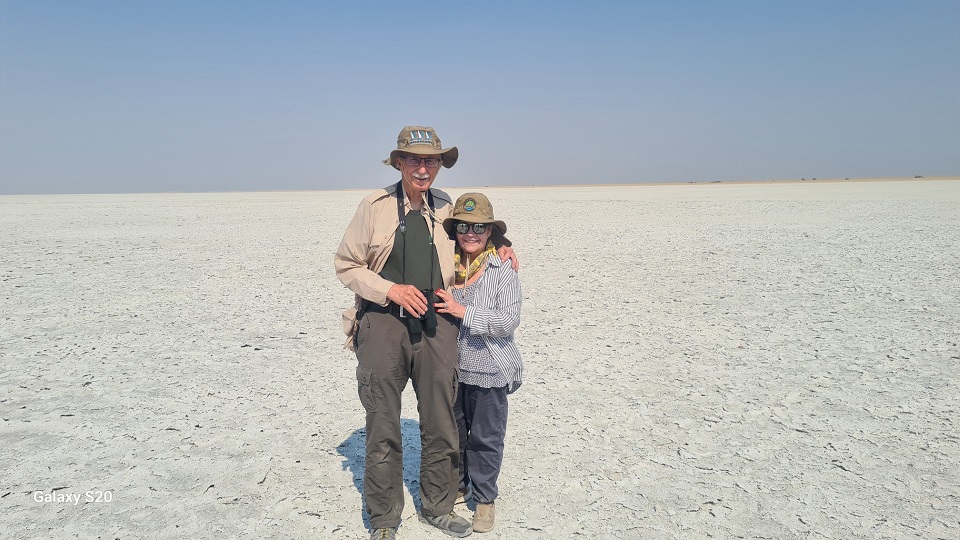
The Ntwetwe Pan is a large salt pan in northeast Botswana near the town of Gweta. It measures approximately 120 km (75 miles) east-west and 160 km (100 miles) northeast-southwest. It consists of dried mud, covered in a layer of salt, as far as you can see in any direction.
Activities in the Ntwetwe Pan
There aren’t many things to do in a salt pan. The main activity is bombing around on quad bikes with a tour group. Quad bike tours can be arranged at Planet Baobab. They can also arrange accommodations
You can also arrange to camp out on the Planet Baobab to see the millions of stars without any light from human habitation.
We simply drove across it, stopping for lunch in the middle.
Planet Baobab
Planet Baobab can arrange tours to the Ntwetwe Salt Pan and provide accommodations’
Also see our page about the Baobab forest and Planet Baobab.
Link: Planet Baobab
When to go?
The time to visit the Ntwetwe Pan is during the dry season from May to October.
We Crossed the Ntwetwe Pan
We crossed the Ntwetwe Pan, stopping halfway for lunch. There was not a single blade of grass or anything else in sight in any direction.
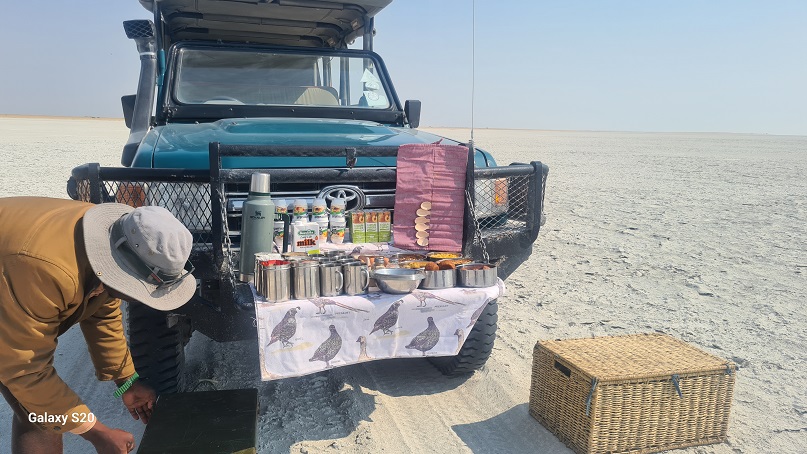
Warning: Do not attempt to cross the pan without a guide. It is very easy to get lost in the 8,000 sq km with no landmarks.
The Ntwetwe Pan in the Wet Season
Now for the amazing things about the Ntwetwe Pan. Would you believe there are shrimp and flamingos in this salt desert with no lakes?
After lunch, the guide gave a talk about the salt pan. He said that if you dig down a short way, the soil would be damp. He demonstrated this, and sure enough, he did not have to dig very far before we could see the dark, damp soil.
He said that if you dug a bit deeper, you’d find shrimp. What? What are shrimp doing underground in a desert? He said that they are waiting for the rainy season.
It did not rain the entire time we were in Africa because it was the dry season. The dry season is best for seeing the wildlife as they gather at the waterholes. The rainy season starts in November.
During the rainy season, it rains almost every day. Soon, the salt pan has absorbed as much water as it can. Remember that it was already damp below the surface. Soon, the salt pan becomes a shallow lake. Only about 20 cm deep. (8 inches). This was what the shrimp had been waiting for, and they made their way to the surface.
While the shrimp were happily swimming around and reproducing, it was the cue for hundreds of flamingos to come and eat them.

The inland flamingos in southern Africa are highly nomadic. During the dry season, they travel to wherever there is water.